
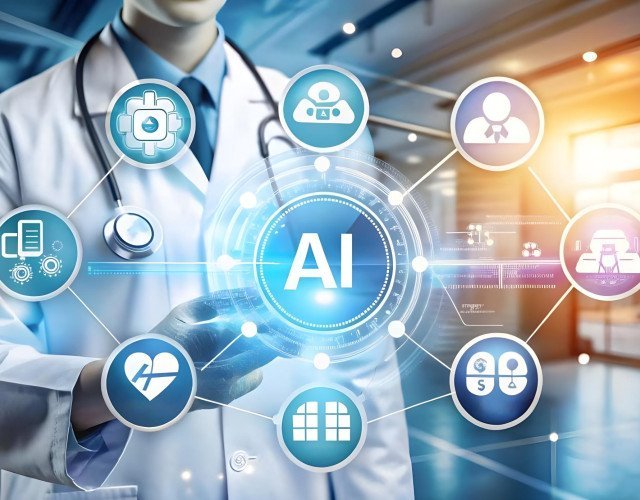
This course provides a comprehensive introduction to the principles and applications of Artificial Intelligence (AI) in the modern medical laboratory. Designed for medical technologists and specialists, the program balances foundational knowledge with practical, hands-on experience. Participants will explore how AI is transforming diagnostic testing, laboratory automation, and quality control, and will gain the skills to critically evaluate and adopt AI-powered solutions in their own work environments.
Target Audience:
Undergraduate and Graduate Students in Life Sciences
Medical Laboratory Technologists and Specialists
Researchers and Scientists in Medical and Clinical Laboratories
Biotechnology and Pharmaceutical Industry Professionals
Stem Cell and Regenerative Medicine Researchers
Academic Faculty Members
Laboratory Managers and Quality Assurance Professionals
Learning outcomes
By the end of this course, participants will be proficient in:
Define core AI concepts, including machine learning and deep learning, and their relevance to laboratory medicine.
Identify key applications of AI across the entire laboratory workflow, from pre-analytical to post-analytical phases.
Evaluate the use of AI in various diagnostic disciplines, such as hematology, pathology, and microbiology.
Apply basic AI tools and techniques to analyze laboratory data and interpret results in a hands-on setting.
Describe the process of validating and implementing AI models in a clinical laboratory, including quality assurance and regulatory considerations.
Analyze the ethical implications and future trends of AI in laboratory medicine.
Schedule
3 days, 5 hours/day
Instructor information
Dr. Luay Abuqatouseh, PhD in medical microbiology and immunology.
Certification
Upon completion of this course, a certificate of attendance approved by the Higher Health Council will be provided
- Format In-Person Course
- Category General Laboratories
- Students 20
- Start 26 August 2026
- End 27 August 2026
- Registration End 27 August 2026